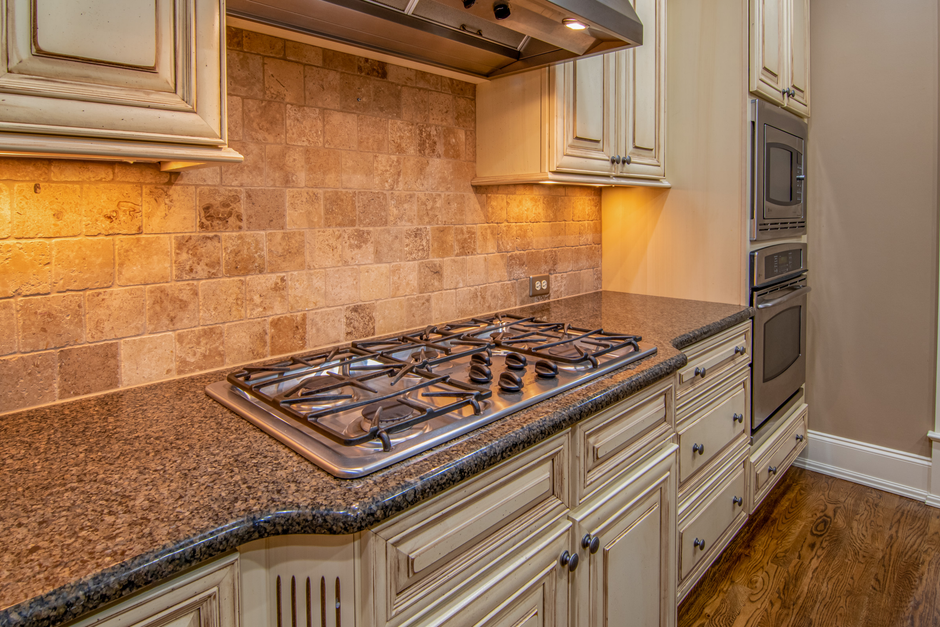

Countertop Fabrication in Austin, TX

Notes from inside the shop on countertop fabrication in Austin, TX: templating, cutting, edge work, seam layout and what to check at delivery.

What We Cover

Countertop Fabrication in Austin, TX

Countertop fabrication in Austin, TX happens in a shop, not in the kitchen. A slab arrives from a yard, gets laid out against a digital template, and passes through a bridge saw, a CNC router, sometimes a waterjet, and a long run of edge work before a crew carries it into a house. Most of what a homeowner sees at the end was decided at one of those stations.

From the Slab Yard to the Saw

Granite, quartz, quartzite and marble each cut differently. Stone with hard mineral bands out of the Texas Hill Country slows the blade, quartz chips if the feed is rushed, and soapstone cuts easily but scratches in daily use. Pieces are nested on the slab so the veining flows and the flaws land in scrap, and whatever is left over becomes a remnant that a vanity or bar top can use.

Why Austin Kitchens Are Measured Twice

Travis County sits on both sides of the Balcones Fault, so the ground under a house can be limestone near Tarrytown and Mount Bonnell, or shifting clay east of the Colorado River. Older bungalows in Hyde Park, Clarksville and Bouldin Creek often have cabinets that have drifted out of level over decades, and houses near Travis Heights and Mueller can move with the seasons. A digital template records all of it, and seam placement is planned around it.

Edges, Seams and Cutouts

Edge work takes more shop hours than most people expect. A mitered edge, a laminated edge or a bullnose each has its own failure points, and a polished finish is built up through a series of grits. Sink and cooktop cutouts get rounded inside corners, because stone cracks where a corner is sharp. After a long summer day at Zilker Park or Barton Springs Pool, nobody thinks about a seam, but a tight one is the sign of careful layout. The shore of Lady Bird Lake has its own share of newer condos with long stone runs.

Guides

The pages here walk through the shop in order: the template visit, the bridge saw, router and waterjet cutouts, seam layout, edge profiles, and the slab yard. Each one also lists what a homeowner can check when the pieces arrive.

Latest Guides

Machinery in a fabrication workshop

Countertop Fabrication Timelines in Austin: Questions and Answers

2026-10-06

Between the day a slab is chosen and the day a finished top sits on the cabinets, a job passes through a dozen hands and machines. Most of that time is invisible to the homeowner, which makes the wait feel longer than it is. These questions come up again and again from people planning a kitchen or bath in Austin, and the answers follow the path of the stone through the shop.

What happens first after a slab is picked?

The slab is tagged and held at the yard or moved to the shop, and the job goes into the queue for a template. Nothing is cut yet. The shop wants measurements from finished cabinets, because a template taken from cabinets that are still going to move is wasted effort. That is the reason a template visit usually waits until the base cabinets are screwed down, level and fixed in place.

If the kitchen is a gut remodel, this stage is the one most likely to slip. A cabinet install that runs a few days late pushes the template visit, and the template visit pushes everything after it. Homeowners who coordinate the cabinet crew and the stone shop on one calendar lose the least time.

Why does the shop wait for the final sink and cooktop?

The cutouts are cut to the exact dimensions of the sink and the cooktop. An undermount sink comes with a cutout sheet, and the router is programmed to it. If the sink is swapped after the stone is cut, the opening may be too small, and a cutout that is too large cannot be shrunk. Faucet holes follow the same logic.

A shop that is told the sink model will be decided later usually delays the template. That sounds slow, but cutting an opening in a finished top for the wrong sink is slower and worse.

How is the digital template turned into cut pieces?

The templater's file goes to a programmer in the shop, who lays each piece onto a virtual slab. Veining direction, defects in the stone and the slab size all decide where pieces go. Seam locations get set here, and the programmer checks that no seam lands across a sink cutout. Then the nested layout goes to the bridge saw.

The bridge saw makes the long straight cuts, and the CNC router or waterjet does the cutouts and any curves. Edge work follows: grinding, shaping and polishing through a series of finer diamond pads, mitering where a waterfall or thick corner is planned, and laminating strips where an edge is built up. Each stage has its own station, so a job moves down a line rather than sitting at one table.

What slows a job down?

A few things come up more often than any others.

  • Stone that is out of stock or backordered at the yard, which is common for a popular quartz or a specific marble.
  • A second slab needed because the layout ran out of room, so the shop must source a matching piece.
  • Changes to the plan after the template, such as a switch in the sink, the cooktop or the edge profile.
  • Cabinets that are not level or not finished when the templater arrives.
  • Hard stone such as quartzite, which cuts slowly and wears blades quickly.
  • A full shop schedule, since a busy shop works through jobs in order.

None of these is unusual, and none of them says anything about the shop. A homeowner who knows them can ask better questions, such as whether the slab is in the building or still on a truck.

Does weather matter in Austin?

It matters at the edges of the job more than in the middle. The shop itself is indoors, so cutting and polishing go on in any weather. Delivery and installation are different. A hot summer afternoon makes working on a rooftop terrace or a sunny patio bar miserable, and the installer may move a job to the morning. A heavy storm along the Colorado River corridor can close a street or stall a truck, and a wet driveway makes carrying a heavy slab dangerous.

Adhesive cure times shift with temperature and humidity too. In a cool house the seam adhesive takes longer to set, and in a hot one it sets fast, which leaves less time to adjust a lip. Installers adjust for this by working in smaller steps on hot days.

Does the age of the house change the schedule?

Often it does. A bungalow in Travis Heights or Bouldin Creek may have a wall that bows or a floor that dips, and the templater has to record that carefully. A kitchen in one of the older houses near Tarrytown may need an extra visit if the cabinets turn out to need shimming before a template can be taken. Newer houses with factory-straight walls usually go faster, though they bring their own surprises, such as a builder's cabinet run that is a little shorter than the plan.

Clay soil on the east side of Austin moves with wet and dry seasons. A template taken in a dry stretch and an install done after a wet spell can differ by a sixteenth of an inch or so. Shops that leave a small tolerance at the wall absorb that.

What can a homeowner do to keep things moving?

A few habits help, and none takes much effort.

  • Choose the sink, faucet and cooktop before the template visit.
  • Confirm the edge profile and overhang at the visit, so there is no change afterwards.
  • Clear the old counters and keep the work area free for the templater and, later, for the install crew.
  • Visit the slab yard early, and take photos with the lot number visible.
  • Be home on delivery day, with the cabinets cleared and the path from the door to the kitchen open.

Those steps remove the most common causes of delay. They also reduce the chance of an error, because a decision made once, early, is easier to follow than a decision revisited three times.

What does a remnant do to the timeline?

A remnant is already cut from a larger slab, so the shop skips the yard stage and often the slab hold. A bathroom vanity or a small bar top from a remnant can move through the shop quickly, since the piece is small and the layout is simple. The tradeoff is choice. A remnant is whatever is on the rack, and the color and thickness are set by what is there.

Is the installation day itself long?

For a typical kitchen, the install is a matter of hours, not days. The crew sets the largest pieces first, checks level, makes seams, sets the sink if it is an undermount, and cleans up. An island with a waterfall edge, or a kitchen with several seams, takes longer because each seam needs time to be pulled flush and checked.

Plumbing and electrical hookups, such as reconnecting a sink or a cooktop, are usually done by a separate trade afterwards. The stone crew sets the top, and a plumber returns once the adhesive has cured. Homeowners who book the plumber the same day sometimes find the sink cannot be hooked up yet, so a short gap is normal.

What is worth asking the shop at the start?

Ask where the slab is, whether a second slab might be needed, which machine will cut the sink opening, and who does the seams. Ask how the shop handles a piece that arrives chipped. The answers give a clear picture of how the job will run, and they are easier to get before anything is cut than after.

Fabrication takes as long as it takes because each stage depends on the one before it. A job that is planned in order, with the sink chosen and the cabinets level, moves through the shop with few stops.

Read more →

A worker in a workshop

Delivery Day Inspection Checklist for New Stone Countertops

2026-10-06

The crew carries the last piece through the door, the cabinets finally have something on top of them, and the whole kitchen looks done. That moment is also the best chance a homeowner has to catch a problem, because everything the shop did to the stone is visible and nothing has been glued down for good yet. A good inspection takes about half an hour with a flashlight, a straight edge and a little patience.

What should be checked before the pieces are set?

Before any piece goes onto the cabinets, it is worth looking at it standing on edge or lying on the installer's A-frame cart. Stone in this state shows its faults honestly. Hold a flashlight at a low angle across the surface and look for chips, pits and hairline marks. Granite and quartzite often have natural fissures that look like fine lines, and those are part of the stone. A fresh crack has sharp, white edges, and a natural fissure has a dull, weathered look inside it.

Compare each piece to the slab chosen at the yard. In a city where kitchens run from the old bungalows of Hyde Park to the newer builds around Mueller, the slab photos taken at the yard are the best reference for color and veining. If the pattern looks different from the photos, say so right then, while the piece is still off the cabinets.

Which measurements matter on delivery day?

The digital template was taken from the cabinets weeks earlier, so the pieces should fit with very little adjustment. A few quick measurements confirm it.

  • Overhang at the island and at any bar: it should match what was agreed, and it should be the same at both ends of the run.
  • Gap at the wall: a small, even gap is normal and gets covered by caulk or a backsplash. A gap that opens wider toward one end means the wall bows.
  • Reveal at the sink: the strip of sink rim showing past the stone should be even all the way around.
  • Clearance at the range and dishwasher: the stone should not rub against the appliance or block the door.

An installer carries a long level and a tape, and a homeowner can ask to see both used. A fair installer will not mind. The level is the more useful of the two, because a top that is set a little high at one corner will show up as water pooling toward the low side.

How does a good seam look and feel?

Seams are the most scrutinized part of any stone counter, and they are also the part most affected by the day itself. Two pieces are pulled together with clamps or suction cups, and a color-matched adhesive fills the narrow gap between them. The result should be a thin line, level on both sides, and close to the color of the stone around it.

Run a fingernail across the seam, crossways. A tight, level seam passes under the nail with almost no catch. A lip, even a small one, usually means one piece was set higher than the other, and it is far easier to correct on the day, while the adhesive is still soft, than after the crew has gone. Look at the seam again from the side with a window behind it. Raking light shows any gap or dip that overhead light hides.

Seams should also sit in sensible places. Stone is weakest around a cutout, so a seam should land a good distance from a sink or a cooktop opening. On an L-shaped kitchen the seam usually sits at the inside corner or near it. If a seam sits somewhere unexpected, ask why. Sometimes the slab simply ran out, and sometimes the layout could have been better.

What does the edge work tell you?

A finished edge reveals how much attention the shop paid in the polishing stage. Run a hand along every exposed edge and along the underside of each overhang, where a rough spot can hide. The profile should be consistent from one end to the other. An eased edge should have the same small round all the way along, and a bullnose should be a smooth half circle with no flat spots.

A laminated edge, built from a second strip glued under the top, should show a joint line that is nearly invisible when viewed from the front. A mitered edge or a waterfall panel should have corners that meet cleanly, with the veining continuing around the bend. A small gap at a mitered corner is a defect, and it will collect grime for years if it is left.

A quick reference for common findings

What is seenUsually meansWorth raising?
Fine dull line in granite or quartziteNatural fissure in the stoneOnly if it feels like a step or a crack
Sharp white chip on an edgeDamage during cutting or carryingYes, before the crew leaves
Lip at a seamOne piece set higher than the otherYes, it can be adjusted on the day
Crack running from a sink cornerStress at a sharp or poorly radiused cutoutYes, right away
Wider gap at one end of the wallBowed wallUsually normal, covered by backsplash or caulk
Pattern that differs from the slab photosDifferent part of the slab or different bundleYes, while the piece is off the cabinets

What about the sink cutout and faucet holes?

Cutouts are cut by a CNC router or a waterjet, and the corners should be rounded rather than square. Square inside corners concentrate stress, and a heavy cast iron sink or a thermal shock from a hot pan can open a crack from the corner. Look closely at each inside corner of the sink opening and of any cooktop opening. The edge of the cutout should be smooth, with no chips and no saw marks.

Count the faucet holes against the faucet's spec sheet, and confirm that the position lines up with the sink bowl. A soap dispenser or a side sprayer needs its own hole, and adding one later means drilling through a polished top with the sink in place, which is a job nobody enjoys.

Does the surface itself need attention?

Natural stone such as marble, soapstone and many granites is sealed after fabrication, or sealed once it is installed. Ask whether a sealer has been applied and what it was. A drop of water on the surface should bead up for a few minutes if the seal is working. Quartz and porcelain do not need sealing, and a solid surface top is nonporous too.

Look at the surface across the whole top, with the flashlight again, for swirl marks left by polishing, or for a dull patch where a repair has been made. A repair on a chip or a pit is common and acceptable when it is well done, and it should be nearly invisible. A patch that stands out in raking light deserves a conversation.

What can be done about a problem found on the day?

Most issues have a straightforward answer. A lip at a seam can be adjusted while the adhesive is soft. A small chip can be filled and polished by the installer or returned to the shop for repair. A cracked piece usually goes back, since a crack in a piece of stone cannot be trusted to stay put, and the shop recuts the piece from the slab, or from a matching one if the first slab has been used up.

Take photos of anything questionable before the crew leaves, with a coin or a tape in the shot for scale. A dated photo of the problem and a note about what was said to the installer go a long way toward getting it handled quickly. The weather also plays a part in Austin, since a hot, humid day can speed up the cure of an adhesive, and a cold morning can slow it down. The Balcones Fault and the Texas Hill Country region give the area its mix of limestone and clay, and the same houses that sit on that mix can show small shifts in level that a template picked up weeks ago.

What should be left alone for the first day?

Seam adhesive needs time to cure, so heavy appliances, a loaded stand mixer and a sharp knock on the seam can wait a day. The installer will say how long. Cleaning is simple: warm water and a mild soap on a soft cloth. Skip harsh cleaners on any natural stone, and keep acids such as lemon juice and vinegar off marble.

A careful look on delivery day catches nearly everything a homeowner can catch, and the rest shows up in the first few weeks of normal use.

Read more →