Where Seams Go and Why They Show

The seam does one job: it joins two pieces of slab where one piece alone cannot reach. Every teardown austin countertop fabrication pdc 2015 has logged shows the same thing, that a seam is a decision made at the template stage, long before the countertop reaches a kitchen in Austin, TX.
Where a seam belongs
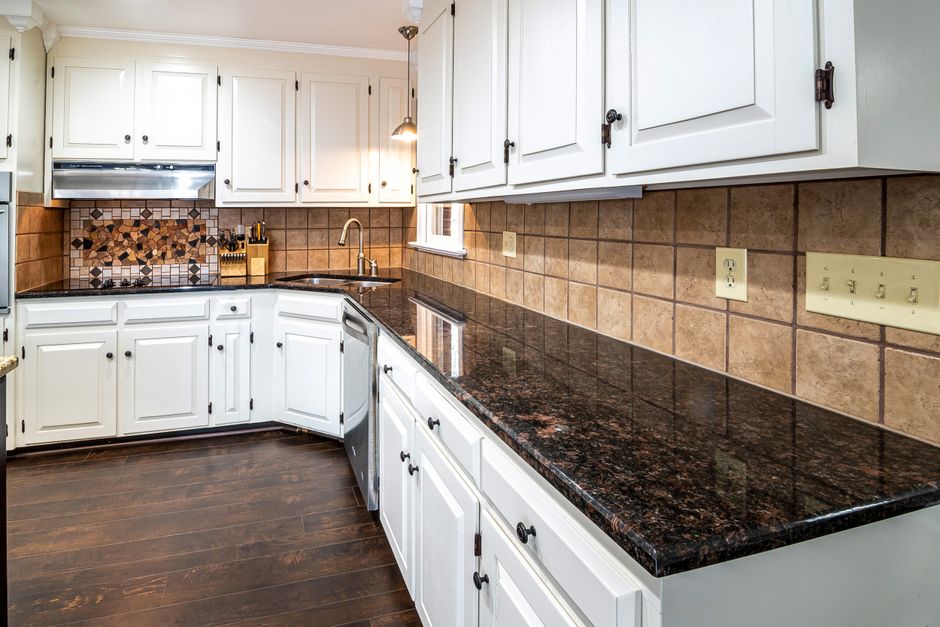
A slab is only so long, and a kitchen with an L or a large island needs more than one piece. The usual spot is the inside corner of the L, where two runs meet, or a point in a long run where the slab length ends. A seam should never land over a sink cutout or a cooktop opening. Stone is weakest at a cutout, and a seam there takes the load of a heavy sink and the heat of a pan.
Matching the pattern
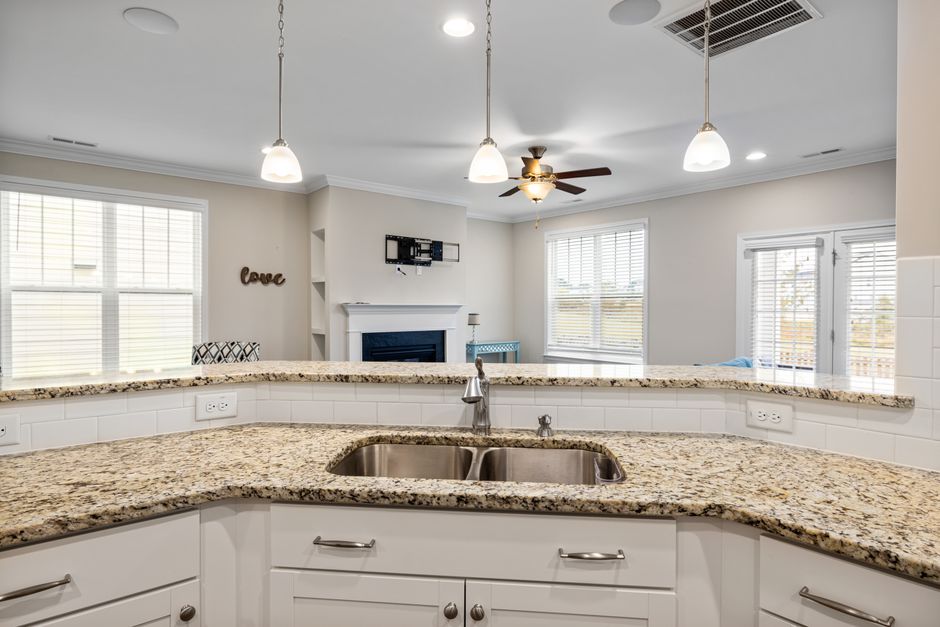
Pieces are cut from the same slab and placed side by side so the veining runs through the seam. Quartz with a fine pattern hides a seam easily, while marble and quartzite with dramatic veining show it if the layout is careless. Where the pattern is bold, the fabricator may choose a mitered corner so the line carries around the bend.
The gap, the glue and the clamps
Two pieces are brought together with a seam gap about as thin as a business card. The edges are cleaned, a color-matched adhesive is worked in, and seam clamps or vacuum cups pull the two tops flush. The installer checks level across the joint with a straight edge, then scrapes off the squeeze-out before it hardens. A seam that catches a fingernail has been set unevenly or left to cure too high.
Soil movement on the east side of Austin
Houses on the east side of Austin sit on clay that swells in wet weather and shrinks in a dry spell. The floor moves, and cabinets move with it. A seam over a stretched cabinet run is the first place that movement appears, usually as a slight lip. Good practice is to place the seam over a sturdy cabinet frame and to support both pieces evenly, so the slab moves as a unit. Granite, quartz and porcelain tops all behave this way.
What to check at delivery
Look at the seam in raking light, from the side of the counter with a window behind it. The line should be thin, level and close to the color of the stone. Run a hand across it, and check that it sits well clear of the sink corner. Any lipping or visible gap should be raised with the installer before the crew leaves, since a seam is far easier to adjust on the day than a month later.